
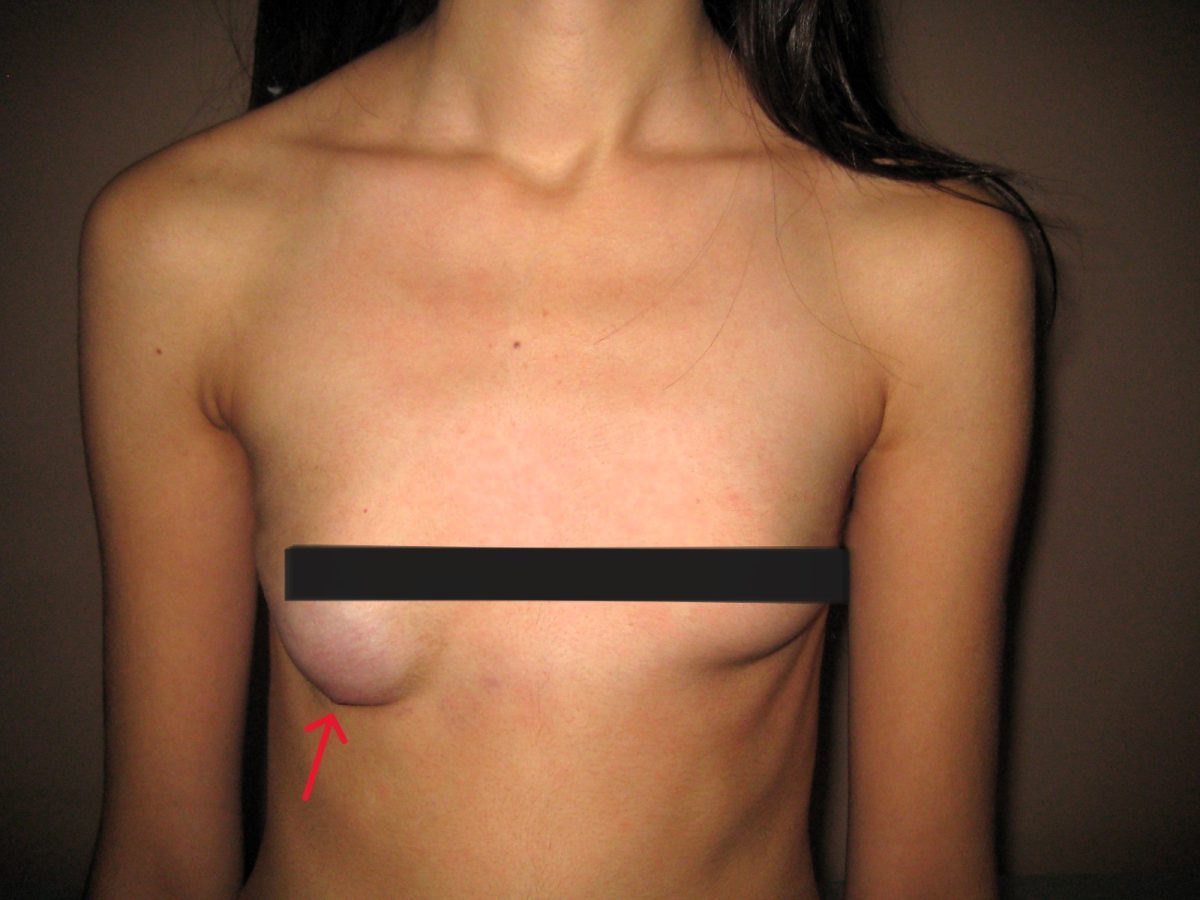
FIBROADENOMA
It is a benign breast tumor that occurs as a result of the excessive response of breast tissue to the hormone estrogen. Its incidence is 10-20% and it is mostly seen in young women (aged 20-40). It is rarely seen after menopause and often shrinks by calcifying. In adolescence, a giant fibroadenoma that can reach a size of 5-10 cm may occur.
Fibroadenoma is a single lesion in 90% of cases in the breast and rarely more than one. On physical examination it is an elastic-consistency mass, 2-3 cm in size, that can be moved easily. The growth rate of a fibroadenoma is high at young ages and during pregnancy, and low after birth and during the breastfeeding period.
Almost none of these tumors turn into cancer. The definitive diagnosis is made with a core needle biopsy. They are divided into simple and complex fibroadenomas.
If a risk factor does not accompany a simple fibroadenoma, the risk of breast cancer does not increase. In contrast, if a risk factor accompanies a complex fibroadenoma, the risk of breast cancer increases, so surgical removal is recommended.
Follow-up of a fibroadenoma with ultrasound is essential. Among the reasons requiring surgery are a family history of breast cancer, age (>40), tumor size (>3 cm) and rapid growth between two follow-ups.


