

Breast diseases · Benign breast diseases

Breast Cysts

Breast Cysts

Cysts are the most common benign lesions in the breast. The diameter of a cyst can vary from 1 mm to several cm. According to the ultrasound image, they are divided into simple and complicated cysts. Simple cysts are benign, while complicated cysts are divided into probably benign and suspicious according to their contents. Cysts cannot be considered precursors of breast cancer. However, if dysplasia accompanies the cysts in the biopsy material, this indicates an increased breast cancer risk.

APPROACH TO CYSTS

The fluid of benign cysts does not need to be drained, but if they cause complaints and are larger than 3 cm, they are drained with a fine needle. If the content that comes out is bloody, a pathological evaluation should be performed. 4-6 weeks after the procedure, it is necessary to evaluate again with a physical examination or, if necessary, radiologically. If the same cyst fills up again with fluid despite being drained three times, it should be removed surgically.
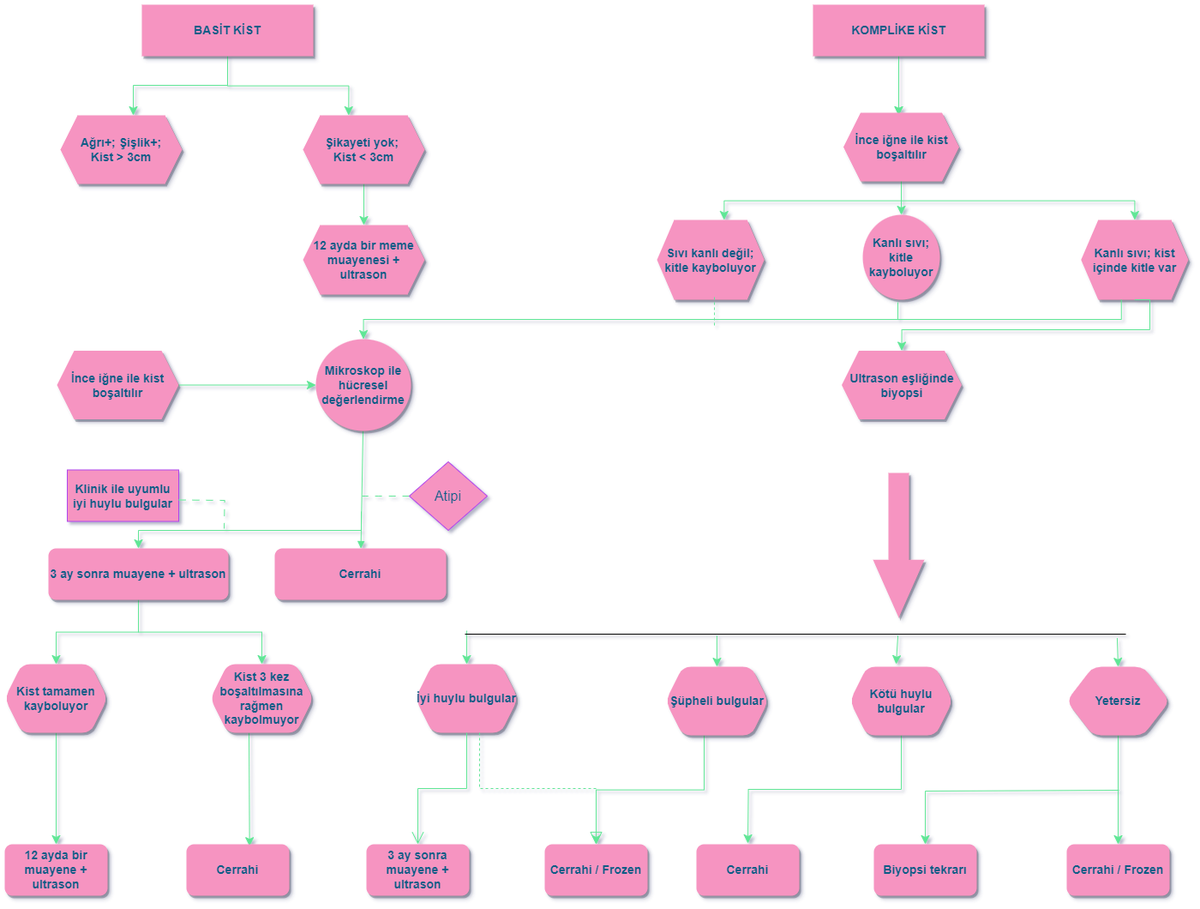
Breast cysts

*Clinical suspicion, family preference and patient preference

Let’s answer your questions together.

Frequently asked questions

Your questions, answered.

The most common questions about Breast Cysts, with short answers.

What is a breast cyst?

Cysts are the most common benign lesions of the breast. Cyst diameter ranges from 1 mm to several centimeters.

Does a breast cyst turn into cancer?

Cysts cannot be considered precursors of breast cancer. However, if dysplasia accompanies the cysts in a biopsy specimen, this shows an increased risk of breast cancer.

What is the difference between a simple and a complicated cyst?

By ultrasound appearance, cysts are divided into simple and complicated. Simple cysts are benign; complicated cysts are divided by their contents into probably benign and suspicious.

How is a breast cyst treated?

Benign cysts do not need draining. If they cause complaints and are larger than 3 cm, they are drained with a fine needle. If the fluid is bloody, pathological evaluation should be done.

What happens if a breast cyst refills after being drained?

A physical exam or, if needed, a radiological evaluation is needed 4-6 weeks after the procedure. If the same cyst refills with fluid despite three drainages, it should be removed surgically.

When is surgery needed for a breast cyst?

Surgical removal is needed for cysts that recur despite drainage three times. The decision depends on clinical suspicion, the family's preference and the patient's preference.

How are a cyst and a solid mass told apart?

A mass can be a fluid-filled sac (cyst) or a solid mass filled with another tissue. The best way to tell them apart is ultrasound.

Social media

Follow us.

Our social media accounts for the latest posts and breast health information.

Patient reviews

What our patients say.

Reviews are taken from independent doctor review sites (in Turkish).

