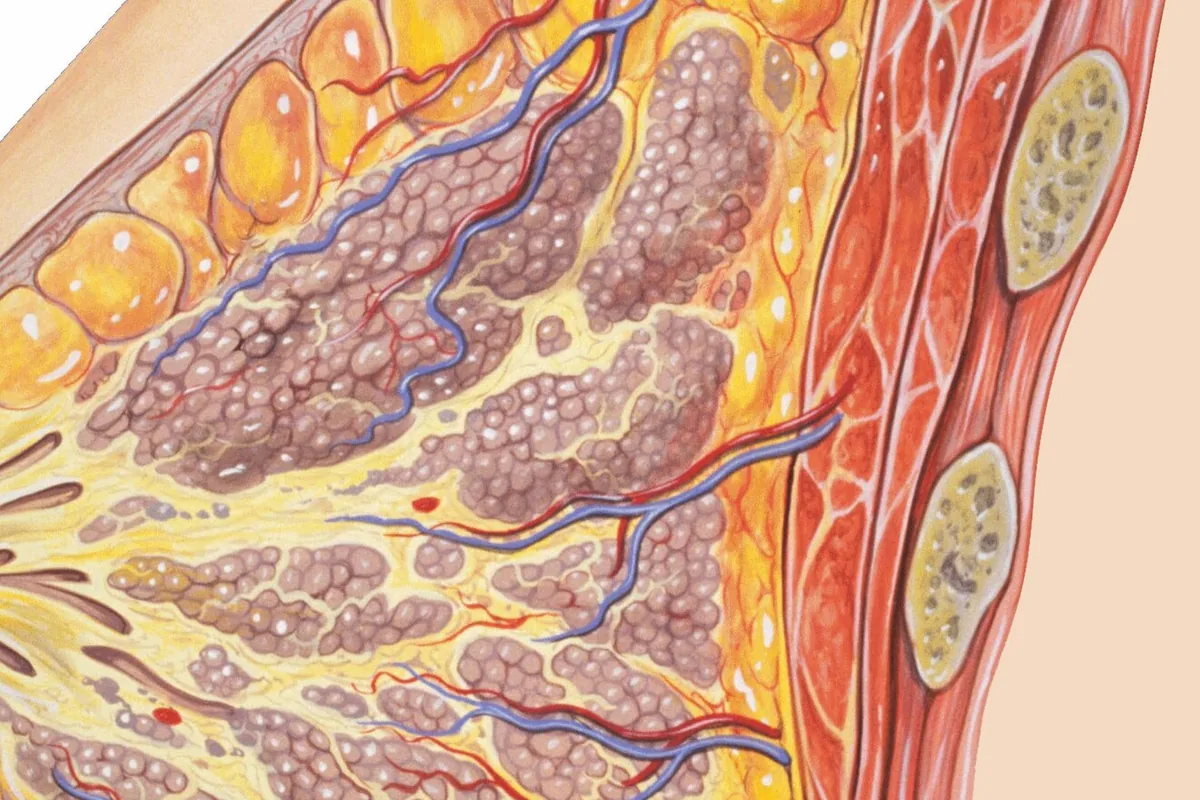
Breast development begins before birth, changes markedly during puberty, pregnancy and breastfeeding, and regresses after menopause. The main hormones guiding this process are estrogen and progesterone.
When does breast development begin?
The breast arises in the womb from a thickening of skin along the “milk line” that runs down the front of the chest and abdomen. At birth there is a small duct system and a nipple.
How does the breast develop in puberty?
In puberty the ovaries produce more estrogen. Usually between the ages of 8 and 13 a breast bud appears; the nipple and areola grow and the duct and gland tissue develops. Development takes several years and is described by Tanner stages (1-5). It is normal for the two breasts not to develop at exactly the same pace and for mild asymmetry to be present.
Does the breast change during the menstrual cycle?
Yes. Before a period the breasts may feel full, tender or painful; these symptoms usually ease after the period.
How does the breast change in pregnancy and breastfeeding?
In pregnancy, estrogen, progesterone and prolactin make the lobules multiply and grow; milk production starts after birth. After breastfeeding ends, the glandular tissue shrinks again.
How does the breast change at menopause?
At menopause estrogen levels fall; glandular tissue decreases and is replaced by fat. The breast may become softer and looser, so density on mammography usually decreases.
When should I see a physician?
If you notice a painful or rapidly growing lump, nipple discharge or a skin change, see a physician at any age.
The content is for information purposes only and does not replace a medical examination.
Related pages: Breast Anatomy, Breast self-examination, Physician examination
Images: Andrewmeyerson, CC BY-SA 3.0, Wikimedia Commons